Elementary Tables Manufacturers in Delhi – Durable Classroom Tables for Schools & Educational Institutions
Elementary tables are an essential part of a well-organized classroom, providing students with dedicated space for writing, reading, drawing, and completing academic activities. Cultivated Interiors serves buyers looking for elementary tables Manufacturers in Delhi, including schools, educational institutions, and other learning facilities. Choosing suitable tables involves considering student age groups, classroom layouts, available space, and everyday usage. Explore the important selection factors, indicative specifications, and purchasing considerations below to identify a table configuration that suits your educational environment.
Cultivated Interiors offers office and institutional furniture solutions, including school furniture. Buyers exploring elementary tables Manufacturers in Delhi can discuss their requirements and evaluate suitable table arrangements for their educational environment. The selection process should focus on practical usability, appropriate dimensions, convenient maintenance, and compatibility with the intended classroom layout.
Key Features and Practical Benefits of Elementary Tables
Elementary tables should support the activities students perform throughout the school day. Their suitability depends on the selected design, construction, dimensions, and intended application.
Functional tabletop: A suitable working surface gives students space for notebooks, textbooks, stationery, drawing sheets, and classroom exercises.
Appropriate table dimensions: Table height and surface area should correspond to the students' age group and the chairs used with the tables.
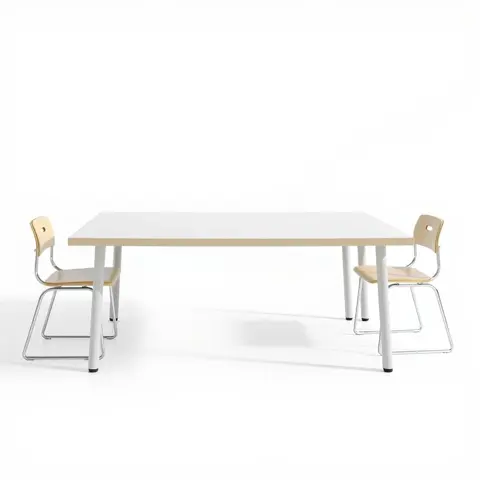
Practical classroom arrangement: Rectangular tables can help schools organize individual work areas or selected group-learning arrangements, depending on the room layout.
Easy-to-maintain surfaces: Smooth, appropriately finished surfaces can simplify routine cleaning and help staff manage everyday spills and marks.
Space-conscious design: Choosing the right table footprint helps institutions plan seating arrangements while preserving reasonable access between furniture rows.
Coordinated furniture selection: Tables selected alongside suitable student chairs can create a more consistent and organized classroom environment.
These are selection considerations rather than claims about every available model. Buyers should assess the actual product design and confirm its features before placing an order.
Design, Materials and Construction Considerations
The tabletop and supporting structure influence how an elementary table fits into a classroom. Depending on the product selected, common industry options include laminated engineered wood, plywood-based panels, plastic surfaces, and metal support frames. These are examples of materials used in the broader furniture category, not verified specifications of a particular Cultivated Interiors model.
When comparing alternatives, examine the tabletop finish, edge treatment, frame construction, joints, and stability. The finish should suit the intended cleaning routine, while the supporting structure should be appropriate for the expected use.
Rounded or smoothly finished edges may also be worth considering for furniture used by younger students. Any specific edge design, material grade, coating, or structural feature should be confirmed against the offered product.
Usability, Student Comfort and Classroom Organization
An elementary table should allow students to reach their learning materials comfortably without unnecessarily restricting their movement. The correct combination of table height, chair height, and tabletop depth depends on the students who will use the furniture.
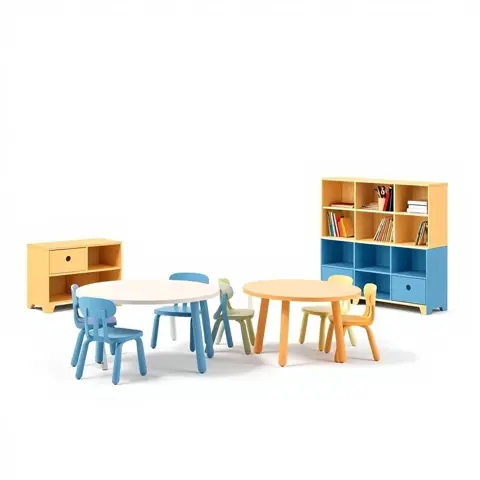
For younger children, age-appropriate dimensions are particularly important. Schools should review the available space for notebooks, books, and creative activities while checking whether students can sit and work comfortably.
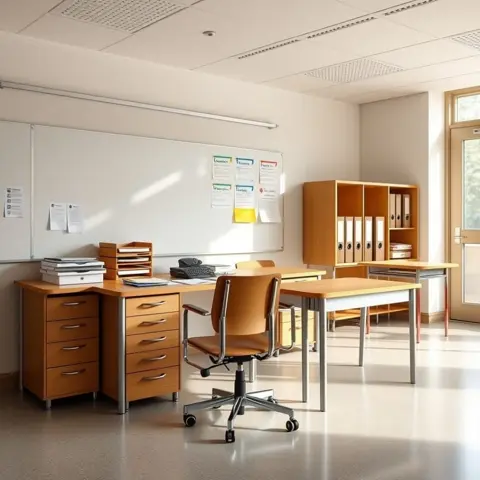
Classroom organization also matters. Tables can be positioned for individual assignments, teacher-led activities, art sessions, or collaborative exercises. Before selecting a configuration, consider the number of students, walking routes, teacher access, and storage arrangements. A well-planned layout makes better use of available space without relying on a particular table design alone.
Applications Across Educational and Learning Environments
Elementary tables may be suitable for several learning environments, depending on their dimensions, construction, and intended use.
Primary school classrooms: For writing practice, reading exercises, drawing, and daily lessons.
Pre-primary learning areas: For supervised activities such as colouring, puzzles, and simple classroom projects, when the table dimensions are suitable.
Coaching and tuition centres: For written exercises, worksheets, and small-group learning.
Activity rooms: For craft sessions and other practical learning activities.
Institutional learning spaces: For training rooms or multipurpose educational areas where the selected table configuration meets the users' requirements.
Home study areas: For children who need a dedicated surface for homework, reading, and creative work.
The appropriate model should always be selected according to the users, activities, available room, and furniture requirements.
How to Choose the Right Elementary Tables?
Before contacting elementary tables Manufacturers, prepare a basic furniture requirement plan. This makes product comparison and quotation discussions more productive.
Identify the age group: Determine whether the tables are intended for preschool children, primary students, or another group.
Measure the classroom: Record room dimensions, usable floor space, door positions, and the space needed for movement.
Estimate the quantity: Calculate the number of tables required and decide whether individual or shared surfaces suit the teaching arrangement.
Compare materials: Review the available tabletop and frame materials against the intended usage, cleaning requirements, and budget.
Check dimensions: Ask for actual height, length, and width measurements, then compare them with the chairs and available room.
Plan maintenance: Consider how frequently the furniture will be cleaned and whether the proposed finish suits the school's routine.
Review the quotation: Compare the product configuration, quantity, transport, assembly requirements, and applicable commercial terms.
This preparation helps procurement teams make decisions based on practical needs instead of price alone.
Product Specifications and Customization Planning
Product specifications should be evaluated against the actual model offered. Important details include tabletop material, frame material, dimensions, finish, edge design, seating arrangement, and any additional features. The table below provides indicative industry examples for elementary tables to help buyers prepare their requirements. It is not a confirmed Cultivated Interiors product specification sheet.
If a project requires particular colours, dimensions, materials, or a specific number of student places, share these details during the enquiry. Any customization, available configurations, and minimum order requirements should be discussed directly with the company before being treated as confirmed.
Why Consider Cultivated Interiors?
Cultivated Interiors operates in the furniture sector, with offerings that include office furniture, modular furniture, and school and institutional furniture. Its website identifies its business location as Sector 63, Delhi, Uttar Pradesh. For buyers planning a school furniture purchase, the next step is to communicate the intended application and quantity clearly. Schools, administrators, procurement teams, and other institutional buyers can use these details to discuss suitable furniture options and request relevant product information.
Rather than selecting a table based on a product name alone, ask for the available model details, dimensions, material information, and commercial terms. This helps establish whether the proposed table meets the requirements of your classroom or learning space.
Request Details for Your Elementary Tables Requirement
If you are planning a new classroom, expanding an existing school, or replacing older furniture, prepare the number of tables required, the student age group, the preferred table arrangement, and your approximate space measurements.
Contact Cultivated Interiors to discuss your elementary table requirements, request available product specifications, and obtain a quotation based on your project needs. Confirm the final design, material, dimensions, quantity, applicable charges, and delivery arrangements before placing the order.
For institutional purchases, sharing a complete requirement list at the beginning can make product evaluation and purchasing discussions more efficient.