Student desks and chairs provide dedicated spaces for writing, reading, classroom activities, examinations, and everyday learning. Cultivated Interiors caters to educational institutions and other buyers looking for student furniture suited to their space, age group, and classroom layout. Choosing the right combination involves considering desk size, seating comfort, construction materials, maintenance, and the number of students using the room. As Student Desks and Chairs Manufacturers in Faridabad is a key search term for local buyers, this page helps you evaluate essential product considerations before discussing your requirements with Cultivated Interiors.
Student desks and chairs are essential classroom furniture that provide learners with dedicated spaces for writing, reading, studying, and completing academic activities. A suitable furniture arrangement helps educational institutions organise classrooms according to student numbers, teaching methods, available floor space, and daily learning requirements.
Cultivated Interiors caters to buyers exploring student furniture for schools, coaching institutes, tuition centres, training facilities, and other educational environments. The appropriate desk and chair combination depends on the intended age group, classroom layout, seating arrangement, and frequency of use. Buyers should evaluate these requirements before selecting furniture for a new classroom or upgrading an existing learning space.
Key Features and Practical Benefits
The selection of student desks and chairs involves several practical considerations that influence everyday classroom usability.
Dedicated Study Space
A desk provides a surface for textbooks, notebooks, writing materials, and other learning resources. The required working area depends on the activities performed and the number of students sharing a desk. Individual desks may suit independent work, while shared configurations can accommodate collaborative classroom arrangements.
Appropriate Seating
Student chairs should provide a suitable seating position for the intended age group. Seat height, seat depth, backrest design, and available legroom are important considerations when comparing options. Selecting appropriately sized furniture can help students maintain a more comfortable working position during lessons.
Classroom Organisation
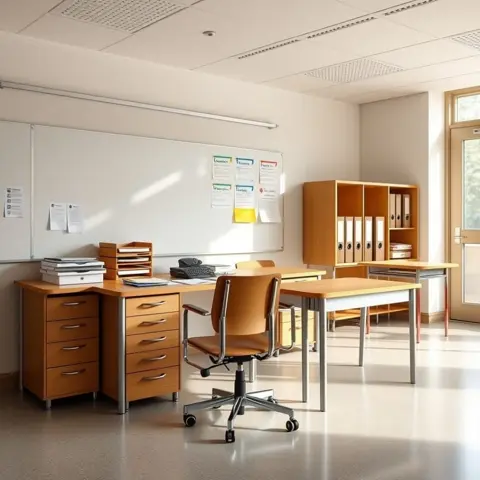
Coordinated desks and chairs help institutions plan seating rows, examination layouts, and teacher movement areas. Furniture dimensions should be evaluated alongside classroom capacity and circulation space to develop an arrangement that supports both teaching activities and practical room management.
Everyday Usability
Furniture should be selected according to its expected usage, cleaning requirements, and classroom routines. Simple designs may be suitable for environments where regular cleaning and straightforward furniture arrangement are priorities.
Design, Materials and Construction
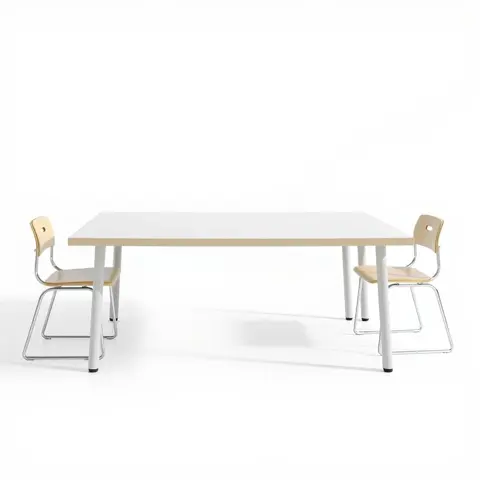
Student furniture is available in different designs and material combinations. Common market options include metal frames, wooden or engineered-wood desk surfaces, moulded plastic seats, and combinations of plastic seating with metal supports.
Each material offers different considerations. Metal frames are commonly used in school furniture, while wooden and engineered-wood surfaces provide options for writing and studying. Moulded plastic seating offers a relatively simple surface to clean. The suitability of any material depends on its construction, finish, intended use, and maintenance requirements.
These are general industry options, not confirmed specifications for every Cultivated Interiors product. Buyers should request the applicable product details, including frame construction, tabletop material, edge finishing, joints, and surface treatment, before placing an order.
Comfort, Dimensions and Usability
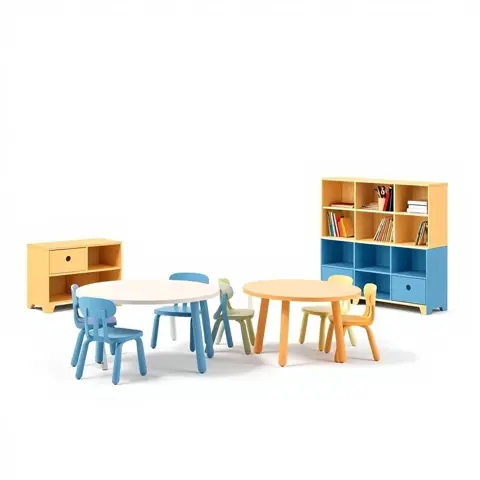
The dimensions of student desks and chairs should correspond to the learners who will use them. Furniture designed for younger children may not suit older students, while adult-sized furniture may be unsuitable for primary classrooms.
When evaluating a set, consider seat height, backrest support, desk height, writing surface dimensions, and the relationship between the chair and tabletop. Students should have adequate room for their legs and sufficient working space for their usual learning materials.
The number of desks that fit into a room should not be the only selection criterion. Teachers also need practical access to students, and learners need enough room to sit, stand, and move around their work areas. Measuring the classroom before ordering helps buyers evaluate these requirements.
Applications and Suitable Environments
Student desks and chairs can be considered for several educational and learning environments, depending on the selected configuration.
Schools: Classroom seating for primary, middle, and secondary education, subject to suitable dimensions.
Coaching institutes: Furniture arrangements for lessons, practice sessions, and examination preparation.
Tuition centres: Study spaces for small groups and individual learners.
Training institutions: Desks and chairs for instructional sessions, written exercises, and classroom-based training.
Libraries and study rooms: Dedicated furniture for reading, writing, and independent study.
Home study areas: Compact arrangements for children completing homework and other academic activities.
The final selection should reflect the users, available space, and activities planned for each environment.
How to Choose the Right Student Furniture
Before approaching Student Desks and Chairs Manufacturers in Faridabad, buyers should prepare a clear furniture requirement.
First, identify the student age group and preferred seating arrangement. Next, measure the classroom, including available floor space, doorways, and existing furniture. Decide whether individual desks, shared desks, or another configuration is more appropriate.
Compare tabletop dimensions, seating proportions, material preferences, edge finishing, and ease of cleaning. For frequently used classrooms, review the construction details and suitability for the intended usage rather than relying on appearance alone.
Institutions should also calculate the required quantity and consider whether additional furniture may be needed for future classroom expansion. A written specification helps buyers compare quotations on a consistent basis.
Product Specifications and Customisation
Student desks and chairs can vary in dimensions, seating capacity, frame construction, surface materials, colours, and overall configuration. However, the actual options available depend on the particular product selected.
Buyers should request a product-specific specification sheet covering dimensions, materials, finish, construction, and any applicable customisation options. Do not assume that a particular size, colour, or configuration is available without confirmation.
Why Consider Cultivated Interiors?
Cultivated Interiors serves customers looking for furniture solutions for educational and other working environments. Buyers can discuss their student furniture requirements, intended application, approximate quantity, and preferred configuration to identify suitable options for further evaluation.
For institutional purchasing, providing a detailed requirement helps establish a clearer basis for product discussions and quotation preparation. Buyers can compare the proposed furniture against their classroom measurements, intended users, and procurement criteria before making a decision.
Enquiry and Next Steps
If you are planning a classroom installation, expanding an educational facility, or replacing existing furniture, begin by preparing your seating requirements and room measurements.
Contact Cultivated Interiors to enquire about student desks and chairs, request applicable dimensions and material details, and discuss quantity and configuration requirements. Reviewing these details before finalising an order helps educational buyers make a more informed furniture selection.